
Most travelers going from Cairo to Luxor choose the direct route.
They fly.
They take the overnight train.
Or they travel south through the Nile Valley.
But there is another way to cross Egypt—one that turns the journey itself into one of the highlights of your trip.
A Cairo to Luxor via Western Desert journey leaves the Nile Valley behind and travels through a chain of oases and desert landscapes before eventually reconnecting with the Nile at Luxor.
The classic route runs approximately:
Cairo → Bahariya Oasis → White Desert → Farafra Oasis → Dakhla Oasis → Kharga Oasis → Luxor.
Egypt’s official tourism authority specifically describes a road looping from Cairo into the Western Desert, passing through the oasis chain and reconnecting with the Nile Valley at Luxor. It identifies Dakhla and Kharga as two of the four main oases along this route.
A longer version can also begin with Fayoum, Wadi El Rayan and Wadi El Hitan before reaching Bahariya.
That creates an extraordinary overland route combining prehistoric fossils, green oases, black volcanic-looking hills, white chalk formations, ancient mud-brick settlements, Roman temples and finally the monumental archaeological landscape of Luxor.
If you are looking for an ordinary transfer from Cairo to Luxor, this route is not the fastest choice.
But if you want Egypt’s desert to become a major part of your trip rather than something you see through an airplane window, it can be one of the country’s most distinctive itineraries.
For an overview of the wider region, start with our Western Desert Egypt travel guide.
Cairo to Luxor via Western Desert: Quick Answer
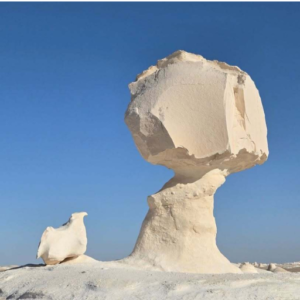
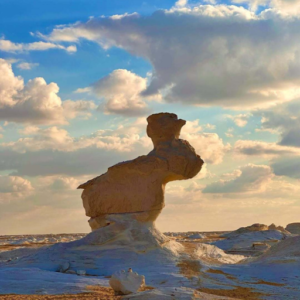
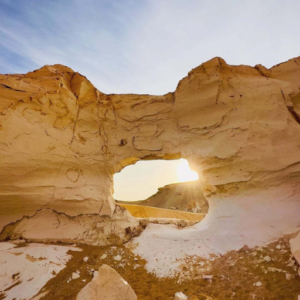
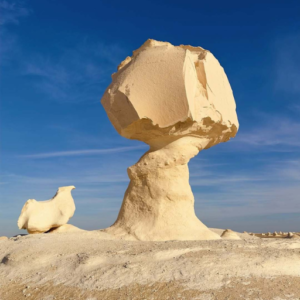
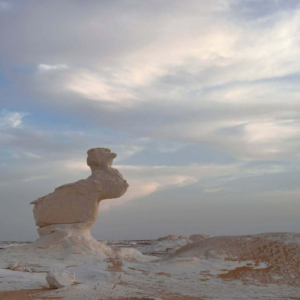
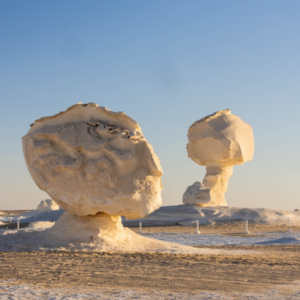
The Western Desert route from Cairo to Luxor typically requires around five to six days for a practical first journey.
A five-day route can follow:
Day 1: Cairo → Bahariya Oasis
Day 2: Bahariya → Black Desert → Crystal Mountain → Agabat → White Desert
Day 3: White Desert → Farafra → Dakhla
Day 4: Dakhla → Kharga
Day 5: Kharga → Luxor
Western Desert Travel currently operates this structure as a 5-day / 4-night Cairo-to-Luxor expedition.
A six-day version can add:
Fayoum → Wadi El Rayan → Wadi El Hitan
at the beginning before continuing through Bahariya and the southern oasis chain. Western Desert Travel’s current 6-day expedition follows Cairo → Fayoum → Bahariya → White Desert → Farafra → Dakhla → Kharga → Luxor.
Explore the 5-Day Western Desert Tour from Cairo to Luxor
Explore the 6-Day Western Desert Expedition from Cairo to Luxor
Why Travel from Cairo to Luxor Through the Western Desert?
The obvious question is:
Why spend five or six days traveling from Cairo to Luxor when you can fly in about an hour?
Because these are two completely different products.
A flight is transportation.
The Western Desert route is the trip.
Instead of seeing only your starting point and destination, you experience a cross-section of western Egypt.
You move from Cairo into Bahariya’s palms and springs.
Then the landscape turns dark in the Black Desert.
Later, enormous chalk-white formations appear around the White Desert.
Farafra provides another oasis environment.
Dakhla introduces old villages, agricultural land and archaeological remains.
Kharga adds major ancient monuments before the road finally turns east toward Luxor.
Egypt’s official tourism materials themselves promote Cairo → Bahariya → Farafra → Dakhla → Kharga → Luxor as one of the country’s major desert itineraries.
For travelers who have already seen classic Egypt—or who want more than classic Egypt—that variety is the reason to choose the route.
How Many Days Do You Need?
For most travelers, five days is a reasonable minimum.
Six days is better if you want to add Fayoum or slow the pace.
Seven days or more makes sense if you want deeper exploration, extra desert nights or more time in Dakhla and Kharga.
5 Days
Best for travelers who want the classic oasis circuit without adding Fayoum.
Route:
Cairo → Bahariya → White Desert → Farafra → Dakhla → Kharga → Luxor
This is the most efficient version.
6 Days
Best for travelers who also want:
Wadi El Rayan + Wadi El Hitan
before continuing to Bahariya.
This adds a completely different geological environment to the trip.
7+ Days
Best for:
photography, slow travel, extra desert camping, archaeology and travelers who dislike rushed itineraries.
The route itself contains enough variety to justify more time.
5-Day Cairo to Luxor Western Desert Itinerary
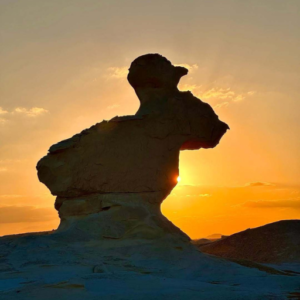
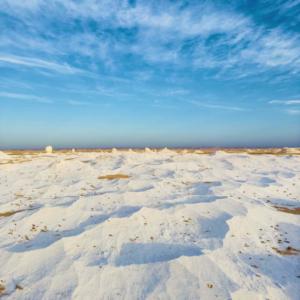
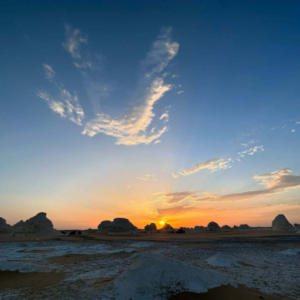
A strong five-day itinerary focuses on the core Western Desert oasis chain.
Day 1: Cairo to Bahariya Oasis
Your journey begins by leaving Cairo behind and driving southwest toward Bahariya Oasis.
Egypt’s official tourism authority describes Bahariya as the closest Western Desert oasis to Cairo and estimates the road journey at around five hours by bus, taxi or private car.
The change in landscape becomes increasingly obvious as Cairo disappears.
Traffic and buildings give way to open desert.
Eventually, vegetation reappears as you approach Bahariya.
The oasis makes a natural first stop because it provides:
palm groves, agricultural land, springs, desert viewpoints and access to the Black and White Deserts.
A typical first afternoon may include a local 4×4 tour around Bahariya with stops at dunes, the salt lake, oasis gardens and sunset viewpoints.
Western Desert Travel’s current five-day route uses this first day for the Cairo-to-Bahariya transfer followed by local exploration and an overnight hotel stay.
For detailed transportation information, read our Cairo to Bahariya Oasis guide.
You can also explore our Bahariya Oasis Egypt travel guide.
Day 2: Bahariya to the White Desert
Day two is where the classic desert safari really begins.
You leave Bahariya in an appropriate 4×4 vehicle and travel toward some of the Western Desert’s most recognizable landscapes.
A typical route includes:
Black Desert → El Haize → Crystal Mountain → Valley of Agabat → White Desert.
These locations are not simply minor stops on the same landscape.
They look surprisingly different from one another.
Black Desert
The Black Desert is characterized by dark hills and black material scattered over the lighter desert surface.
It provides a dramatic contrast with what comes later.
Learn more in our Black Desert Egypt guide.
El Haize
El Haize provides an oasis stop along the journey and may be used for lunch or a spring visit depending on the itinerary.
Crystal Mountain
Crystal Mountain is one of the best-known geological stops between Bahariya and Farafra.
Egypt’s official tourism authority describes it as a geological feature associated with an ancient cave pushed toward the surface, with visible crystals reflecting sunlight.
Read our Crystal Mountain Egypt guide.
Valley of Agabat
Agabat brings broad golden desert scenery, pale cliffs and dunes.
Egypt’s official tourism site highlights the valley’s soft sand, dunes and distinctive white cliffs.
White Desert
Finally, the landscape becomes increasingly pale.
Egypt’s Environmental Affairs Agency lists the White Desert as a protected area declared in 2002, covering approximately 3,133.5 square kilometers, and describes its chalk formations, fossils and unusual karst landscape.
For many travelers, an authorized overnight desert camp is the emotional highlight of the entire Cairo-to-Luxor route.
Instead of checking into another city hotel, you end the day surrounded by open desert.
For detailed information about the destination, see our White Desert Egypt guide and White Desert camping guide.
Day 3: White Desert to Farafra and Dakhla Oasis
After leaving the White Desert, the journey continues south toward Farafra Oasis.
Farafra is often overshadowed by the White Desert, but it forms an important geographical link in the traditional oasis route.
Egypt’s official tourism authority places Farafra around 180 kilometers from Bahariya and describes its springs, historic settlement, gardens and surrounding desert.
Depending on your itinerary and available time, a Farafra stop may include the old settlement, local art, springs or a short oasis exploration.
Then the road continues to Dakhla Oasis.
The journey between Farafra and Dakhla is one of those stretches that makes the scale of Egypt’s Western Desert obvious.
The distances are long.
Settlements are limited.
The horizon dominates.
And then eventually the landscape changes again as cultivated land and palm trees announce your arrival in Dakhla.
What Is Special About Dakhla Oasis?
Dakhla is much more than somewhere to sleep between Farafra and Kharga.
Egypt’s official tourism authority describes Dakhla as a green oasis with extensive agricultural land and a remarkable concentration of ancient villages, temples, fortresses and burial sites.
Among its major attractions are:
Al-Qasr – a historic mud-brick settlement and former medieval capital of the oasis.
Deir El-Hagar Temple – a Roman-period temple with surviving reliefs and inscriptions.
Al-Muzawwaqa Necropolis – known for Roman-era tombs, including preserved painted examples.
Balat and Ain Asil – archaeological areas associated with an important Old Kingdom settlement.
Ezbet Bashendi – a traditional mud-brick village.
Walking through Dakhla can feel completely different from exploring Cairo or Luxor.
Here the attraction is often not one enormous monument but the relationship between settlement, agriculture, desert and architecture.
Explore our Dakhla Oasis Egypt guide.
Day 4: Dakhla to Kharga Oasis
The fourth day continues through the New Valley Governorate toward Kharga Oasis.
Egypt’s tourism authority describes Kharga as the southernmost and largest of the four main oases along the Western Desert highway connecting back toward Luxor.
Kharga has a different personality from Dakhla.
Dakhla often feels intimate, rural and village-based.
Kharga is larger and historically played an important administrative and strategic role.
It also contains several significant archaeological sites.
What to See in Kharga Oasis
Temple of Hibis
The Temple of Hibis is one of Kharga’s most important monuments.
Egypt’s official tourism authority describes it as the oasis’s largest and best-preserved temple, developed over successive Dynastic, Persian, Ptolemaic and Roman periods.
Its long building history reflects Kharga’s strategic importance over centuries.
Necropolis of Al-Bagawat
Al-Bagawat is one of the oasis’s most fascinating historical sites.
Experience Egypt describes it as one of the world’s oldest Christian burial grounds, incorporating elements of both Egyptian and Christian funerary traditions.
Al-Ghweita Temple
This temple was constructed over earlier settlement remains during the Persian period.
Qasr Al-Zayan
Another important oasis temple, associated with Amun-Hibis.
New Valley Museum
For travelers interested in the wider history of Egypt’s oases, the museum provides artifacts spanning long periods of regional history.
Read more in our Kharga Oasis Egypt guide.
Day 5: Kharga to Luxor
The final stage turns east.
After days moving through the Western Desert, the road eventually reconnects with the Nile Valley at Luxor.
This transition is one of the most satisfying parts of the entire journey.
For several days your surroundings have been:
desert, oases, open roads and small settlements.
Then suddenly you’re back in one of Egypt’s great archaeological centers.
The UK FCDO’s current Egypt travel advice explicitly identifies the roads Farafra → Dakhla → Kharga, Kharga → Baris, and Baris → Luxor among the Western Desert exceptions to its broader warning for much of the region. It still advises travelers to follow official guidance and notes limited communications and medical facilities in desert areas.
The road should therefore be treated as an organized expedition route rather than a casual detour.
Once in Luxor, the character of the trip changes completely.
You are now surrounded by:
Karnak Temple, Luxor Temple, Valley of the Kings, Valley of the Queens and the enormous archaeological landscape of ancient Thebes.
The desert journey ends exactly where another chapter of Egypt begins.
6-Day Cairo to Luxor Route via Fayoum
If you have one additional day, adding Fayoum creates an even more diverse itinerary.
Western Desert Travel’s six-day route begins:
Cairo → Fayoum → Wadi El Rayan → Wadi El Hitan
before continuing to Bahariya and the main oasis circuit.
The advantage is that Fayoum offers experiences that don’t repeat anything later in the route.
Wadi El Rayan
Wadi El Rayan combines lakes, desert landscapes and dunes.
Rather than beginning your journey with pure arid desert, you start with one of Egypt’s most unusual wetland-and-desert environments.
For the full day-trip version, see our Fayoum Day Trip from Cairo guide.
Wadi El Hitan – Whale Valley
Wadi Al-Hitan is one of the most important fossil sites in the world.
UNESCO inscribed it as a World Heritage Site in 2005 because of its exceptional fossil evidence showing the evolution of whales from land-based mammals toward ocean-going animals.
The site contains fossils of extinct Archaeoceti and preserves evidence of one of the major evolutionary transitions in mammalian history.
That means a six-day route gives you:
ancient whale fossils
→ oasis settlements
→ White Desert geology
→ medieval villages
→ ancient temples
→ Luxor.
There are few itineraries in Egypt that move through such a broad span of natural and human history.
5 Days vs 6 Days: Which Route Is Better?
Choose the 5-day route if your priority is the core Western Desert.
You’ll get:
Bahariya, Black Desert, White Desert, Farafra, Dakhla and Kharga.
Choose the 6-day route if Wadi El Hitan and Fayoum are also important to you.
The extra day makes sense particularly for:
geology enthusiasts, families, photographers and travelers interested in UNESCO sites.
Can You Drive from Cairo to Luxor Through the Western Desert Yourself?
This is not the road trip we recommend treating like a European self-drive holiday.
The route involves long desert distances, changing local regulations, checkpoints, remote areas and sections where specialized desert travel arrangements are appropriate.
Current UK travel advice says tourists entering Bahariya, Farafra, the White Desert and Black Desert must arrange permits in advance and use an official guide. It also warns of limited phone reception and poor medical facilities in the Western Desert.
Egypt’s official tourism authority likewise advises travelers to confirm permits, transportation and logistics with hotels, tour operators or authorized agencies before heading into desert routes.
The issue is not simply knowing how to drive.
A desert expedition requires knowledge of:
route conditions, fuel, checkpoints, permits, local guides, 4×4 sections, supplies and emergency planning.
An organized private expedition is therefore fundamentally different from renting a car and following GPS.
Is the Cairo to Luxor Western Desert Route Safe?
No desert expedition should be described as risk-free.
However, it is important to distinguish recognized oasis routes from unrestricted travel across the entire Western Desert.
As of September 30, 2026, UK government travel advice excludes several destinations and specific roads on this itinerary from its broader advice against all but essential travel to much of the Western Desert.
Those exceptions include:
Bahariya, Farafra, Dakhla, Kharga, the White and Black Deserts, the Farafra–Dakhla–Kharga road, Kharga–Baris and Baris–Luxor.
The same guidance says permits and official guides are required for tourists entering several northern Western Desert areas and warns that phone reception and medical facilities are limited.
Different governments may issue different advice.
Travelers should therefore check the latest guidance from their own country close to departure and follow current Egyptian requirements.
For a deeper discussion, read our White Desert Egypt Safety Guide.
What Type of Vehicle Is Used?
A Cairo-to-Luxor Western Desert expedition may involve different types of driving.
Some sections follow paved roads connecting the oases.
The White Desert portion requires more specialized off-road capability.
Western Desert Travel’s five-day itinerary uses 4×4 desert safari vehicles and includes a mixture of hotel stays and desert camping.
This makes sense because one vehicle environment cannot always optimize every part of such a varied route.
A desert safari vehicle must deal with terrain that ordinary urban transportation never encounters.
Where Do You Sleep?
Accommodation normally varies during the route.
A typical expedition might include:
Bahariya: hotel or oasis accommodation.
White Desert: authorized desert camp when current regulations permit.
Dakhla: hotel, eco-lodge or possibly camping depending on itinerary.
Kharga: hotel.
This mix is part of the experience.
You are not spending five nights in identical resorts.
One night may involve a private room.
Another may involve sleeping under a desert sky.
That variety appeals strongly to adventure travelers but should be understood before booking.
If camping is a concern, ask exactly how many nights are planned outdoors.
What Is Camping in the White Desert Like?
Camping is less about luxury facilities and more about location.
The appeal comes from:
sunset, silence, stars and sunrise among unusual chalk formations.
A professionally organized trip should provide the necessary camping equipment and supplies.
But remember that camping permissions and access requirements can change.
Always confirm arrangements for your specific dates.
Read our full White Desert camping guide.
Best Time for a Cairo to Luxor Western Desert Expedition
For most travelers, October through April is the strongest period.
Why?
Because this route involves a lot of outdoor time.
You’re not simply moving from air-conditioned hotel to air-conditioned museum.
You may spend hours:
walking, sightseeing, photographing, exploring desert landscapes and sitting outside at camp.
The cooler months generally make those activities more comfortable.
October and November
Excellent overall months.
Days are warm without midsummer extremes.
Evenings become cooler.
Photography conditions can be excellent.
December to February
Excellent for travelers who dislike heat.
But do not underestimate nighttime desert temperatures.
Bring proper warm layers.
A sunny afternoon can feel comfortable, while a desert camp after sunset may feel cold.
March and April
Another excellent period.
The days become warmer while conditions remain much more manageable than during peak summer.
Spring also works particularly well for travelers beginning with Fayoum and Wadi El Hitan.
May to September
Possible, but more demanding.
Summer temperatures can make prolonged outdoor exploration uncomfortable.
If your dates are flexible, cooler months are generally better for an itinerary involving this much desert travel.
Read our detailed Best Time to Visit Western Desert Egypt guide.
What Should You Pack?
The challenge is that you are packing for several different environments.
Cairo may feel warm.
Desert nights can feel cold.
You may spend hours in vehicles.
You will also walk through archaeological sites.
Essential categories include comfortable layered clothing, closed shoes, strong sun protection, personal medication, toiletries, phone and power bank, camera equipment, warm evening clothing and a compact day bag.
For the camping component, your operator should explain what equipment is already provided.
There is no benefit in carrying your own sleeping bag across Egypt if appropriate equipment is already included.
Our White Desert Egypt packing list goes into greater detail.
Is This Route Good for Families?
It can be, but families should understand the amount of road travel involved.
This is not a resort holiday.
Some days include several hours in vehicles between destinations.
Older children who enjoy:
geology, fossils, desert landscapes, camping and ancient history
may find the trip fascinating.
Very young children may struggle with the driving distances and changing accommodation.
The six-day version can sometimes feel easier than the five-day route simply because the experience is distributed across an extra day.
Is It Good for Solo Travelers?
Yes, especially as an organized private or small-group expedition.
For solo travelers, the biggest challenges are not boredom or attractions—they are logistics and cost.
A private multi-day 4×4 expedition naturally costs more per person when only one traveler is using the vehicle and guide.
Shared departures, when available, may reduce costs.
Solo travelers should clarify:
whether the trip is private or shared, sleeping arrangements, included meals, guide language and single-room supplements.
Is It Good for Photographers?
Very much so.
Few Egyptian itineraries change scenery as dramatically over several consecutive days.
Potential subjects include:
Bahariya palms, Black Desert hills, Crystal Mountain, Agabat cliffs, White Desert chalk formations, Farafra landscapes, Dakhla mud-brick architecture, Kharga temples and the approach to Luxor.
The biggest photography advantage comes from sleeping inside the route.
You’re not visiting every landscape between 10 AM and 2 PM.
You can reach some places at sunset or sunrise.
For landscape photography, that matters enormously.
Cairo to Luxor via Western Desert vs Train
These options solve completely different travel needs.
Take the Train If:
Luxor is the destination and you simply need transportation.
Take the Western Desert Route If:
The journey is part of the destination.
A train gives you more time in Luxor.
The desert route gives you five or six days of completely different experiences before reaching Luxor.
Neither should be judged only by speed.
Cairo to Luxor via Western Desert vs Flight
A flight wins easily on time.
If you have a short Egypt trip focused on temples and tombs, flying may be the logical choice.
But an airplane skips:
Bahariya, White Desert, Farafra, Dakhla and Kharga.
For travelers with enough time, the Western Desert route effectively converts a transfer day into a multi-day expedition.
Cairo to Luxor via Western Desert vs Nile Route
The normal Nile Valley route keeps you closer to Egypt’s most famous ancient sites.
The Western Desert route focuses on landscapes and oases.
The best choice depends on your trip.
First-time visitors with limited time may prioritize the Nile.
Adventure travelers, repeat visitors and people with longer itineraries may find the Western Desert far more unusual.
How Much Does a Cairo to Luxor Western Desert Tour Cost?
There is no meaningful single price that applies to every expedition.
The cost depends on:
trip length, number of travelers, private vs shared arrangement, accommodation level, camping nights, vehicle type, meals, local guides, entrance fees and seasonal demand.
Western Desert Travel’s current five-day route is private and customizable, and pricing varies according to group size, tour format and travel season.
The correct way to compare prices is not:
Tour A costs less than Tour B.
Instead compare:
How many days?
Which oases?
Which meals?
Which hotels?
How many camping nights?
Are permits handled?
Are entrance fees included?
Is Cairo pickup included?
Is Luxor drop-off included?
Is the trip private?
For broader budgeting, use our Western Desert Egypt Tour Cost Guide.
Is the Route Worth It?
If your goal is simply reaching Luxor, no.
Take the train or fly.
But if the question is:
Is the Western Desert worth dedicating five or six days to?
For the right traveler, absolutely.
This itinerary connects environments and historical periods that most conventional Egypt tours never put together.
You can begin near Cairo.
See whale fossils preserved from an ancient marine environment.
Cross Bahariya.
Camp among White Desert formations.
Walk through a medieval mud-brick oasis settlement.
Visit Roman-period temples.
Then finish in Luxor among the monuments of ancient Thebes.
Very few journeys give you that combination.
5-Day or 6-Day Western Desert Tour: Final Choice
Choose the 5-day Cairo to Luxor expedition if you want the most efficient version of the classic route:
Cairo → Bahariya → White Desert → Farafra → Dakhla → Kharga → Luxor.
See the 5-Day Cairo to Luxor Western Desert Tour
Choose the 6-day expedition if you want to add:
Fayoum + Wadi El Rayan + Wadi El Hitan
before continuing through the oasis chain.
See the 6-Day Western Desert Expedition from Cairo to Luxor
For travelers planning the region from scratch, our Western Desert Egypt itinerary guide provides additional route ideas.
Final Verdict: Cairo to Luxor via the Western Desert
Traveling from Cairo to Luxor via the Western Desert is one of the most adventurous alternatives to the conventional Nile Valley route.
Egypt’s own official tourism materials recognize the route connecting Cairo, Bahariya, Farafra, Dakhla, Kharga and Luxor as a major desert itinerary.
The journey can be completed in around five days, while a six-day version allows you to begin with Fayoum and Wadi Al-Hitan.
Along the way, the landscape evolves continuously:
Cairo
↓
Bahariya Oasis
↓
Black Desert
↓
Crystal Mountain
↓
Valley of Agabat
↓
White Desert
↓
Farafra Oasis
↓
Dakhla Oasis
↓
Kharga Oasis
↓
Luxor
Few travelers arrive in Luxor this way.
And that’s exactly the point.
Rather than treating the desert as empty space between Egyptian cities, the route reveals it as a destination filled with geology, archaeology, communities, oases and landscapes that have shaped human travel for thousands of years.
If you have only a few days and simply need to reach Luxor, choose a direct train or flight.
But if you have five or six days and want the road from Cairo to Luxor to become one of the defining experiences of your Egypt trip, take the route through the Western Desert.
Western Desert Travel TripAdvisor reviews
We are proud to be trusted by travelers from the USA, UK, Europe, and expats living in Egypt.
Posted on Tripadvisor
 Nicholas B
Verified
Unforgettable experience My wife and I went on a safari with Western Desert travel and it was an amazing experience. The White Desert was enchanting, Crystal Mountain was breathtaking, and the Black Desert was a unique experience. The guides were professional and helpful, and the meals were delicious and fresh. I highly recommend this company to lovers of adventure, nature, and relaxation. Thank you for an unforgettable experience!Posted on Tripadvisor Gary S
Verified
Excellent service The White Desert tour with Western Desert travel Company was an unforgettable experience. Excellent organization and great service. Thank you!Posted on Tripadvisor Susan PAn amazing adventure An amazing experience! The White Desert tour with Western Desert travel Company was beyond wonderful. The rest at the camp was relaxing, and the meals were delicious. The activities were fun, like sandboarding and camping under the stars. The guides were professional and very helpful. I highly recommend this tour to adventure and nature lovers! ????Posted on Tripadvisor
 Fred AA perfect adventure for us As soon as we left Cairo behind and entered the vast expanse of the Western Desert, it felt like stepping into another dimension. The landscape slowly transformed from the bustling cityscape into endless golden dunes, rugged rock formations, and an overwhelming sense of serenity. Our first stop was Bahariya Oasis, a lush haven in the middle of the arid desert, where palm trees swayed gently in the breeze, and natural hot springs promised relaxation after a long journey.Posted on Tripadvisor
 Justin LA great experience in the White Desert Mohamed is an exceptional tour guide, polite, knowledgeable, and fluent in English. He is calm, well-educated, and makes the experience truly enjoyable. Our trip with him was nothing short of extraordinary! We explored incredible locations, including the Black Desert, once an area of active volcanic craters millions of years ago, the Crystal Zone with its dazzling natural crystals, and the breathtaking White Desert, where wind and time have sculpted the rocks into fascinating animal-like formations such as a snake, fish tail, camel, chicken, and rabbit.The scenery was mesmerizing, but the experience was made even better by the delicious, freshly prepared food. Every moment of the journey was enjoyable, and we were so captivated by the magic of the place that we decided to extend our stay for another night. What was planned as a one-night trip turned into two, simply because we couldn’t get enough of the stunning desert landscape.For anyone seeking a truly unique and unforgettable adventure, I highly recommend this tour with Western Desert Travel!Posted on Tripadvisor
 MakaylaAn authentic experience Our trip to the White and Black Deserts was nothing short of extraordinary! From the moment we set out, we were captivated by the breathtaking scenery—the golden dunes, the black volcanic hills, and the shimmering Crystal Mountain. But the true highlight was camping under a sky full of stars in the White Desert. The tranquility of the desert, combined with the warmth and hospitality of Mohamed and his team, made this experience unforgettable. The freshly prepared meals were delicious, and every detail of the trip was perfectly arranged. If you're looking for an adventure filled with beauty and serenity, this tour is an absolute must!Posted on Tripadvisor
 Bethany FUnforgettable trip in the desert Our camping trip in the White Desert was absolutely magical! From the moment we left Cairo, everything was smoothly organized—thanks to Mohamed and his incredible team. Driving through the Black Desert, marveling at Crystal Mountain, and feeling the golden dunes beneath our feet was breathtaking. But the real highlight was camping under the stars in the serene White Desert. The fresh dinner prepared by Mohamed’s team was beyond delicious, and the whole experience felt like a dream. Their hospitality, attention to detail, and passion for sharing this stunning landscape made this trip unforgettable We can't wait to return for a longer adventure!Posted on Tripadvisor
 Amelie BAn incredible experience This was hands down the best tour we've ever taken! Mohamed, our guide, was friendly, professional, and incredibly knowledgeable. From the moment we set foot in the Black Desert to watching the sunset over the White Desert’s surreal rock formations, every second was awe-inspiring. The landscape looked like something out of a painting, with towering chalk formations shaped by nature over millions of years. We loved the peacefulness of the desert, the delicious food, and the warm hospitality. Initially, we planned for just one night, but we were so enchanted that we extended our stay! Highly recommended for nature lovers and adventure seekers.Posted on Tripadvisor
 didiwadidiI loved this trip This was a trip I had been looking forward to for a long time. Mohamed's advice was invaluable while I was planning the trip. Once underway it was clear that he knew the area very well. Mohamed arranged for local guides to meet us when visiting historical sites. The accommodation was clean and comfortable and the food was excellent. The highlight for me was camping in the white desert, definitely an experience not to be missed. I have no hesitation in recommending Western Desert Travel.Below are the details of my trip:Day : 9 june Travel from Alexandria to Wadi Al Hitan to see the whale fossils. In the late afternoon proceed to Bahariya Oasis. Overnight at Bahariya. Day : 10 juneAfter the breakfast • local safari tour: through the old centre of the oasis, the black mountains, the sand dunes, salt lake, the gardens, pyramid mountain It is the place where the second largest dinosaur in the world was discovered. At sunset we go to the mountain with the ruin called "The English house" It is where the English lived in World War than back to the hotel for the diner. • In the evening there is a possibility to visit the village and the shopsDay : 11 June • After the breakfast we start the safari tour to the White Desert • (about 180 km.) This tour is going off and on road, with 4x4 cars. We will stop and drive to all the special areas between Bahariya and the White Desert , like: • the black desert • the valley of El Haize with the nice, warm spring; here we can have lunch. • the crystal mountains • the valley of l'Agabat Visit the Petrified Watermelon Valley overnight in this place and make the camping and cook frish food for dinner and Bedouin tea on fairDay : 12 juneAfter the breakfast Go for adventures among the dunes lunch time at the ( magic spring ) It is an enchanted Roman water spring. When you approach it, the water flows, and when you move away from it, the water stops and you visit the Roman cemetery. And lunch time than drive to Visiting petrified trees and petrified coral reefs and• the White Desert • We will make the safari camp in the White desert and cook a fresh meal for dinner. Day : 13 June • After breakfast we drive A tour in the White Desert to see chalk rocks of different shapes, such as the Sphinx, horse, chicken, elephant, rabbit than drive to farafa Oasis to visit Badr Museum drive to Dakhla Oasis, after lunch, going to visit Deir Al Hagar, the tombs of Qarat al Muzawaqqa and Al Qasr. Overnight in Dakhla in the hotelDay :14 June after breakfast drive to Kharga Oasis, visit Necropolis of Al Baghawat, the Temple of Hibis, Deir al Munira. will then proceed to Luxor.Posted on Tripadvisor
 PSFantastic Accompanied by an excellent, friendly, knowledgeable host and team. Travelling solo can be daunting in Egypt but they made me feel welcome and well looked after. The desert is just fantastic, and the camping experience very calming - all your problems go away. Muhammed is a great cook, very entertaining and thoughtful. The white desert is has an ethereal beauty, especially pretty at sunset. A must see
Frequently Asked Questions About Cairo to Luxor via the Western Desert
Practical answers about traveling from Cairo to Luxor through Egypt's Western Desert, including Bahariya, the White Desert, Farafra, Dakhla, Kharga, Fayoum, camping, permits, trip duration and the best time to travel.