
Packing for Egypt’s White Desert is different from packing for a normal sightseeing trip in Cairo.
During the same tour, you may spend several hours traveling by road, explore open desert landscapes in a 4×4 vehicle, walk across sand and rock, watch the sunset, eat dinner at a mobile camp and sleep outdoors before waking up for sunrise.
The daytime may feel sunny and warm, while the evening can become significantly cooler. Dust and sand can affect your shoes, camera and electronics, and permanent bathrooms or charging facilities should not be expected at a remote desert camp.
The good news is that you do not need to bring expedition-level equipment for a professionally organized tour.
A local desert team will normally arrange the vehicle, route, food, drinking water and main camping equipment. Egypt’s official tourism platform notes that licensed guides and local tour companies can organize tents, food, permits, transportation and other safari logistics. r responsibility is to bring the personal items that keep you comfortable, protected and prepared.
This White Desert Egypt packing list explains exactly what to wear, what to pack for the night, what to leave behind and how to adjust your luggage according to the season and length of your tour.
Quick White Desert Packing Checklist
For a standard two- or three-day White Desert tour, bring:
- Comfortable, lightweight daytime clothing.
- Warm layers for the evening and early morning.
- A wind-resistant jacket.
- Comfortable closed shoes.
- Spare socks.
- A hat or cap.
- Sunglasses.
- Sunscreen.
- Lip balm.
- Personal medication.
- Basic toiletries.
- Tissues and wet wipes.
- Hand sanitizer.
- A reusable water bottle.
- A small flashlight or headlamp.
- A fully charged power bank.
- Charging cables.
- Camera protection from sand.
- Passport or requested identification.
- A small daypack.
- A compact overnight bag.
- A sealable bag for dirty clothes and waste.
- Some cash for personal purchases before entering the desert.
The most important rule is simple:
Pack in layers, protect yourself from the sun and sand, and avoid bringing more luggage than you can comfortably manage.
What Is Usually Provided on a White Desert Tour?
Before packing, ask your tour operator for an exact list of inclusions.
A properly organized White Desert camping tour may provide:
- Transportation from Cairo or an agreed meeting point.
- 4×4 safari transportation from Bahariya Oasis.
- A local desert guide and driver.
- Drinking water.
- Meals listed in the itinerary.
- Tents or a sheltered sleeping setup.
- Mattresses.
- Blankets.
- Sleeping bags or bedding.
- Cooking equipment.
- Camp lighting.
- Basic seating arrangements.
- Required route and permit organization.
The exact equipment differs between tours and operators.
Do not assume that every tour provides the same mattress, sleeping bag, tent type or bathroom arrangement. Ask direct questions before departure, especially when you have specific comfort requirements.
The 2-day White Desert tour from Cairo includes the essential safari and one desert camping night, while the 3-day White Desert safari from Cairo is designed for travelers who want a deeper experience with two camping nights. longer you stay in the desert, the more important spare clothing, batteries, hygiene products and careful luggage organization become.
What Should You Wear in the White Desert?
The best clothing for the White Desert is practical, comfortable and easy to layer.
Your clothes should protect you from:
- Direct sunlight.
- Wind.
- Sand and dust.
- Cooler evening conditions.
- Temperature changes between day and night.
- Friction during long road journeys.
- Rough surfaces when entering and leaving the 4×4.
Fashion is less important than flexibility.
A good outfit allows you to remove a layer when the sun becomes stronger and put it back on after sunset without needing to unpack your entire bag.
Best Daytime Clothing
For daytime exploration, choose lightweight and breathable clothes that do not restrict movement.
Good options include:
- Lightweight trousers.
- Trekking trousers.
- Loose cotton or technical-fabric pants.
- A breathable T-shirt.
- A lightweight long-sleeved shirt.
- A loose overshirt for additional sun protection.
- Comfortable sportswear designed for walking.
Long trousers are generally more practical than very short clothing because they provide additional protection from sun, sand and rough vehicle surfaces.
A lightweight long-sleeved shirt can also be more comfortable than repeatedly applying sunscreen to your arms.
Avoid clothing that is:
- Very tight.
- Difficult to move in.
- Made from heavy fabric.
- Easily damaged.
- Extremely light-colored if you are concerned about dust marks.
- Covered in accessories that may catch on equipment.
White clothing may look attractive in photographs, but it can show dust quickly. Neutral desert colors, beige, brown, gray, olive and muted blue are generally practical and photograph well against the landscape.
Why You Need Warm Layers
One of the most common packing mistakes is assuming that Egypt’s desert will remain hot throughout the night.
Open desert conditions can feel very different after sunset. Temperatures may fall, and wind can make the night feel colder than expected.
Bring several layers rather than relying on one very heavy coat.
A practical evening combination may include:
- A breathable base layer.
- A long-sleeved shirt or sweatshirt.
- A fleece, hoodie or lightweight insulated layer.
- A wind-resistant outer jacket.
This system allows you to adjust your clothing gradually.
The same layers are useful before sunrise, when travelers often leave the sleeping area to watch the light change across the formations.
For seasonal planning, read our guide to the best time to visit the White Desert Egypt.
What to Wear During Winter
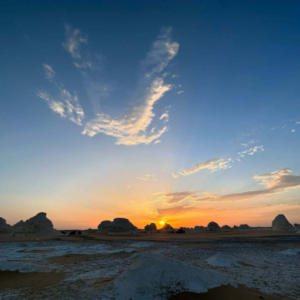
During the cooler months, prioritize warm evening clothing.
Consider packing:
- A thermal or warm base layer.
- A fleece or warm sweatshirt.
- A windproof jacket.
- Long trousers.
- Warm sleeping clothes.
- Thick socks.
- A scarf or neck covering.
- A lightweight beanie.
- Gloves if you are particularly sensitive to cold.
Do not judge the entire trip by the temperature in Cairo at midday.
You may leave the city in comfortable weather and still need several layers at the desert camp after sunset.
A large jacket alone is not always enough. Layering is more flexible because you can use the same items during dinner, stargazing, sleeping and sunrise.
What to Wear During Warmer Months
During warmer periods, focus on sun protection and breathability.
Pack:
- Loose, lightweight clothing.
- Long sleeves made from breathable material.
- Lightweight trousers.
- A wide-brimmed hat.
- Sunglasses.
- High-protection sunscreen.
- A light scarf.
- An additional clean shirt.
- Spare socks.
- A lightweight evening layer.
Even when the daytime is hot, you should still pack one warmer layer for the night.
Summer desert travel requires careful planning and should not be treated as identical to a cooler-season safari. Discuss the expected conditions and schedule with the operator before confirming your travel date.
Should Women Follow a Special Dress Code?
There is no special uniform required for visiting the White Desert.
Women should choose comfortable clothing that provides sun protection and allows easy movement when entering vehicles, walking on sand and sitting at the camp.
Practical options include:
- Loose trousers.
- Leggings under a longer top.
- Lightweight hiking pants.
- Long-sleeved shirts.
- Breathable T-shirts.
- A scarf for sun, wind or dust.
- Comfortable closed shoes.
Visitors may also pass through Bahariya Oasis or other local communities, where modest clothing is respectful and practical.
Very short, restrictive or delicate clothing may be uncomfortable during a long safari, regardless of cultural considerations.
Should Men Wear Shorts?
Shorts may feel comfortable during warmer periods, but long trousers are generally more versatile.
They provide protection from:
- Sun exposure.
- Sand.
- Dust.
- Rough seats.
- Cold evening air.
- Minor scratches during outdoor stops.
Travelers who prefer shorts can pack one pair for suitable conditions but should still bring full-length trousers for the camp and early morning.
Best Shoes for a White Desert Tour
You do not normally need technical mountaineering boots for a standard 4×4 White Desert safari.
The best option is a pair of comfortable closed shoes with reliable grip.
Suitable choices include:
- Lightweight hiking shoes.
- Trail shoes.
- Comfortable walking shoes.
- Sports shoes with a stable sole.
- Lightweight ankle boots.
Your shoes should already be broken in.
A desert trip is not the right time to test new footwear, especially when your itinerary includes several stops and walking over sand, chalk, gravel or uneven ground.
Avoid relying only on:
- Flip-flops.
- Open sandals.
- High heels.
- Heavy fashion boots.
- Shoes with smooth or slippery soles.
- Delicate white sneakers you do not want to get dusty.
You can bring sandals or flip-flops as a second pair for use near the camp, but closed shoes should remain your main footwear.
How Many Socks Should You Pack?
Bring at least one pair of socks for each day plus one spare pair.
For a two-day trip, three pairs are usually sufficient.
For a three- or four-day itinerary, bring additional socks and organize clean pairs in a sealable bag.
Sand can enter shoes even when they are closed. Changing into clean, dry socks at the camp can make the evening significantly more comfortable.
During cooler months, one thicker pair is useful for the night.
Hat, Scarf and Sunglasses
Sun protection is essential in an open landscape with limited shade.
Hat
Choose a hat that:
- Covers your face effectively.
- Fits securely.
- Will not blow away easily.
- Is comfortable inside the vehicle.
- Can be folded or packed without damage.
A wide-brimmed hat provides more coverage, while a fitted cap may be easier in windy conditions.
Scarf
A lightweight scarf or buff is one of the most useful items on a desert trip.
It can protect:
- Your neck from the sun.
- Your face during dusty or windy conditions.
- Your head when additional shade is needed.
- Your mouth and nose during short periods of blowing sand.
You do not need to cover your face throughout the tour. Use the scarf when conditions make it helpful.
Sunglasses
Bring sunglasses with good UV protection.
A hard case is strongly recommended because sunglasses can easily be scratched or damaged inside a crowded daypack.
Travelers who wear prescription glasses may also want:
- A spare pair.
- A protective case.
- A cleaning cloth.
- Lens solution when required.
Sunscreen and Skin Protection
Pack a sunscreen you have used before and know is comfortable on your skin.
Apply it before leaving for the safari and reapply during the day, especially to:
- Face.
- Ears.
- Neck.
- Hands.
- Arms.
- Any exposed part of the legs.
Also bring:
- Lip balm with sun protection.
- Moisturizer.
- Hand cream if your skin becomes dry.
- After-sun lotion if you are particularly sensitive.
- A small pack of facial tissues.
The combination of sunlight, dry air, dust and wind can make skin and lips feel uncomfortable, even when the temperature does not seem extremely high.
A small bottle that fits inside your daypack is more useful than a large bottle stored at the bottom of your main luggage.
What Toiletries Should You Bring?
Keep your toiletry kit simple and compact.
Recommended items include:
- Toothbrush.
- Toothpaste.
- Deodorant.
- Tissues.
- Unscented wet wipes.
- Hand sanitizer.
- Face wipes or cleanser.
- Moisturizer.
- Lip balm.
- Sunscreen.
- Menstrual products where required.
- Contact lens supplies.
- Small quick-dry towel.
- Personal medication.
- Sealable waste bags.
Permanent bathrooms should not automatically be expected at a mobile desert camp.
Ask your operator to explain the specific toilet arrangement before booking. Pack with the expectation that washing facilities will be more basic than those in a hotel.
Avoid bringing a large collection of cosmetics and full-size bathroom products. They add weight, take up space and may be difficult to use in the camp.
Travel-size containers are more practical.
Wet Wipes and Hygiene Products
Wet wipes are useful, but they should be used responsibly.
Bring unscented or biodegradable options where possible, and never leave used wipes in the desert. Many products marketed as disposable do not break down quickly.
Carry a sealable bag and take all personal hygiene waste away from the campsite.
A responsible desert tour should leave no tissues, wipes, packaging or plastic behind.
The White Desert is a protected natural landscape, and visitors should avoid damaging formations or leaving any waste. The area is officially recognized as a natural reserve. Medication and Personal Health Items
Bring every medication you may need during the entire tour, plus a small reserve in case of delays.
Important items may include:
- Prescription medication.
- Asthma inhalers.
- Allergy medication.
- Motion-sickness tablets.
- Pain relief you normally use.
- Rehydration salts.
- Plasters or blister treatment.
- Antiseptic wipes.
- Insect repellent.
- Any required medical documentation.
Keep essential medication in your daypack rather than your main luggage.
Do not place medication in a bag that may be inaccessible during the road journey or safari.
Inform the operator in advance about:
- Serious allergies.
- Medication requiring refrigeration.
- Mobility limitations.
- Pregnancy.
- Diabetes.
- Heart or respiratory conditions.
- Severe motion sensitivity.
- Any condition that could be affected by heat, cold or off-road driving.
Remote parts of the Western Desert have limited phone reception and limited nearby medical facilities. Current official travel guidance also states that permits and an official guide are required for tourists entering the Bahariya, Farafra, White Desert and Black Desert areas. velers should review their own government’s current travel advice and insurance requirements before departure.
Do You Need to Bring Water?
Your tour operator should explain how much drinking water is included.
A properly organized safari normally carries the main water supply for the group, so you should not need to transport several large bottles from Cairo yourself.
However, it is useful to bring:
- A reusable personal bottle.
- An insulated bottle if you prefer cooler water.
- Electrolyte tablets or rehydration salts if you normally use them.
- A small bottle accessible during the drive.
Drink consistently rather than waiting until you feel very thirsty.
Do not reduce water intake because toilet facilities are basic. Proper hydration is more important than avoiding inconvenience.
Confirm whether tea, coffee and other drinks are included in your itinerary.
Should You Bring Food and Snacks?
Meals are normally organized as part of a full White Desert camping tour, but inclusions differ.
Ask which meals are provided before buying additional food.
Useful personal snacks may include:
- Nuts.
- Dried fruit.
- Energy bars.
- Crackers.
- Chocolate that will not melt easily.
- A small sandwich for the road.
- Familiar snacks for children.
- Special items required for dietary or medical reasons.
Avoid bringing excessive food.
Food packaging creates waste, and strong smells may be inconvenient around the camp.
Communicate vegetarian, vegan, gluten-related, allergy-related or religious dietary requirements before departure. Do not wait until the team begins preparing dinner in the desert.
What Electronics Should You Pack?
Charging options may be limited or unavailable at the camp.
Bring:
- A fully charged phone.
- A reliable power bank.
- Charging cables.
- A car adapter when useful.
- Spare camera batteries.
- Additional memory cards.
- A small flashlight or headlamp.
- Spare batteries for the light.
- A protective case for electronics.
Switch your phone to battery-saving mode when reception becomes weak. Phones may consume power faster while repeatedly searching for a network.
Download before leaving Cairo:
- Your booking confirmation.
- Pickup details.
- Offline maps.
- Emergency contact information.
- Passport copies.
- Travel insurance documents.
- Music, books or entertainment for the drive.
- Any translation information you may need.
Do not depend on continuous mobile data.
Why a Headlamp Is Better Than a Phone Flashlight
A headlamp keeps your hands free.
It is useful when:
- Organizing your sleeping area.
- Finding an item in your bag.
- Walking carefully near the camp.
- Using basic toilet arrangements.
- Preparing for sunrise.
- Handling camera equipment at night.
A phone flashlight works as a backup but uses battery power and is less convenient when you need both hands.
Choose a light with a low setting so you do not disturb other travelers or ruin night vision during stargazing.
Camera Packing List
The White Desert is highly photogenic, but sand and dust can damage equipment.
For a phone camera, bring:
- A protective phone case.
- Lens-cleaning cloth.
- Small sealable bag.
- Power bank.
- Compact tripod if you plan night photographs.
For a dedicated camera, consider:
- Camera body.
- Wide-angle lens.
- Standard zoom lens.
- Tripod.
- Spare batteries.
- Memory cards.
- Lens cloth.
- Air blower.
- Protective camera bag.
- Rain or dust cover.
- Sealable plastic bags.
- Remote shutter release.
- Small red-light headlamp.
Avoid changing lenses unnecessarily during windy or dusty conditions.
When you need to change a lens:
- Return to the vehicle or a sheltered location when possible.
- Turn the camera opening away from the wind.
- Prepare the replacement lens before removing the first one.
- Complete the change quickly.
- Store equipment immediately.
Do not clean your lens with clothing. Small particles of sand may scratch the surface.
Packing for Night Photography
Travelers interested in stargazing or astrophotography should add:
- A stable tripod.
- Fully charged batteries.
- Multiple memory cards.
- A remote shutter or timer.
- A wide-angle lens.
- A headlamp with red-light mode.
- Warm clothing.
- Gloves that allow camera control.
- Lens-cleaning equipment.
- A downloaded night-sky application.
- Moon-phase information.
Remember that a bright moon and a dark sky produce different photographic opportunities.
A darker moon phase may reveal more stars, while moonlight can illuminate the white formations and create dramatic landscape photographs.
Discuss photography priorities when booking a private tour, especially when you want additional time at sunset, sunrise or a specific formation.
Passport, Identification and Booking Documents
Ask the operator which documents are required for permits and travel arrangements.
You may need:
- Your original passport.
- A passport copy.
- Egyptian identification for residents.
- Visa or residency information.
- Hotel address.
- Travel insurance details.
- Booking confirmation.
- Emergency contact information.
Keep digital copies on your phone and store a second copy securely online.
Do not send sensitive documents to unverified individuals. Confirm that you are communicating through the operator’s official contact details.
Keep your passport protected from dust, liquids and food by placing it in a secure internal pocket or document wallet.
Cash and Personal Spending
Bring a modest amount of Egyptian cash for personal purchases before or after the desert section.
You may want cash for:
- Drinks or snacks in Bahariya.
- Small local purchases.
- Tips.
- Toiletries you forgot in Cairo.
- Personal expenses not included in the tour.
ATMs and card machines should not be expected during the remote safari.
Do not carry unnecessary amounts of cash. Divide it between two secure locations rather than storing everything in one external pocket.
What Type of Bag Should You Bring?
For a two- or three-day tour, use:
- One small daypack.
- One compact overnight bag or soft duffel.
Your daypack should contain:
- Water bottle.
- Sunscreen.
- Sunglasses.
- Hat or scarf.
- Medication.
- Camera.
- Phone.
- Power bank.
- Tissues.
- Hand sanitizer.
- One warm layer.
- Passport and important documents.
Your overnight bag can contain:
- Spare clothing.
- Sleeping clothes.
- Toiletries.
- Additional layers.
- Spare shoes or sandals.
- Extra electronics.
- Dirty-clothes bag.
Soft luggage is usually more practical than a large hard suitcase because it is easier to arrange inside vehicles and camps.
Leave large suitcases securely at your Cairo hotel when possible, especially if the White Desert is a short section of a longer Egypt itinerary.
What to Pack for a Two-Day White Desert Tour
For one camping night, pack lightly.
A practical two-day list includes:
Clothing
- One daytime outfit.
- One spare shirt.
- One warm evening outfit.
- One sleeping outfit.
- One wind-resistant jacket.
- Two or three pairs of socks.
- Underwear.
- Hat and scarf.
Footwear
- One pair of closed walking shoes.
- Optional lightweight sandals for camp.
Personal Items
- Small toiletry kit.
- Medication.
- Tissues and wet wipes.
- Hand sanitizer.
- Sunscreen.
- Lip balm.
- Headlamp.
- Power bank.
Documents
- Passport or required identification.
- Booking confirmation.
- Cash.
- Emergency contact information.
The 2-day White Desert tour is the shortest practical option for travelers who want the main safari highlights and one complete camping night.
What to Pack for a Three-Day Safari
For two camping nights or a hotel-and-camp itinerary, add:
- One additional daytime outfit.
- Additional underwear.
- Two extra pairs of socks.
- More toiletries.
- Larger power bank or second power bank.
- Additional camera batteries.
- Additional memory card.
- Extra sealable waste bags.
- Additional warm layer in winter.
- More personal snacks if required.
Western Desert Travel currently offers two different three-day formats.
The 3-day White Desert tour from Cairo combines Bahariya and White Desert camping, while the more adventurous 3-day White Desert safari spends more time in remote desert landscapes. ck the exact sleeping arrangements before deciding how many clothes and hygiene items to bring.
Packing for a Four-Day Trekking Expedition
A trekking itinerary requires more preparation than a standard sightseeing safari.
For the 4-day White Desert trekking expedition, consider adding:
- Proper walking shoes.
- Broken-in hiking footwear.
- Moisture-management clothing.
- Additional socks.
- Blister treatment.
- Lightweight walking trousers.
- A comfortable daypack.
- Rehydration salts.
- Trekking poles if recommended.
- Additional sun protection.
- More camera batteries.
- Compact personal first-aid supplies.
- Additional warm clothing.
- Travel-size foot-care products.
The current trekking itinerary is structured around several days of hiking and desert camping rather than only short stops from a 4×4 vehicle. about daily walking distances, terrain and luggage transport before booking.
Packing for Children
Parents should bring familiar items that reduce stress and improve comfort.
Consider:
- Familiar snacks.
- Child-safe sunscreen.
- Hat with good coverage.
- Warm layers.
- Spare clothes.
- Additional wet wipes.
- Personal medication.
- Motion-sickness support recommended by a medical professional.
- Small travel pillow.
- Quiet entertainment for the Cairo drive.
- Refillable water bottle.
- A favorite small blanket or comfort item.
- Sealable bags for dirty clothing.
Children should understand that the camp will not operate like a hotel.
Discuss age, dietary requirements, bathroom needs and off-road comfort with the operator before confirming the trip.
Packing for Older Travelers
Older travelers may benefit from:
- Additional back support.
- A small travel cushion.
- Walking poles.
- Easy-to-remove layers.
- Warm socks.
- Comfortable shoes with reliable grip.
- Clearly organized medication.
- A written medication schedule.
- Additional drinking water access.
- A headlamp.
- A small folding seat when not provided.
- Extra time when entering or leaving the vehicle.
Mobility requirements should be discussed openly.
A customized itinerary with a hotel night in Bahariya may be more suitable than consecutive camping nights for travelers who need greater comfort.
What Not to Bring
Avoid packing:
- Large hard-shell suitcases.
- Expensive jewelry.
- High heels.
- Several pairs of unnecessary shoes.
- Full-size toiletries.
- Delicate clothing.
- Unnecessary glass containers.
- Large speakers.
- Drones without verified permission.
- Excessive disposable plastic.
- Food that spoils easily.
- Items you cannot protect from sand.
- Anything you are not prepared to carry or store safely.
A drone should never be packed on the assumption that it can automatically be used. Drone ownership, transport and operation are regulated, and restrictions can change. Verify current legal requirements through official channels before traveling.
Common White Desert Packing Mistakes
Bringing Only Summer Clothes
The desert may feel warm during the day and cold after sunset. Always bring warm layers.
Wearing New Shoes
New shoes can cause blisters and discomfort. Wear footwear you have already tested.
Packing Too Much
Large luggage creates unnecessary difficulty in safari vehicles and mobile camps.
Forgetting a Power Bank
Phone reception and charging access may be limited. Carry your own power supply.
Leaving Medication in the Main Bag
Keep essential medication accessible throughout the journey.
Depending Only on Flip-Flops
Open shoes provide limited protection during desert stops.
Forgetting Sun Protection
Sun exposure can be strong even when the air feels cool.
Assuming There Is a Permanent Bathroom
Ask about the toilet setup and bring suitable hygiene supplies.
Bringing No Spare Socks
Clean socks make a noticeable difference after a day of sand and driving.
Leaving Everything Until the Morning of Departure
Prepare your bag the night before and confirm pickup details, documents and emergency contacts.
Final Printable White Desert Packing List
Clothing
- Lightweight daytime shirts.
- Long-sleeved shirt.
- Comfortable trousers.
- Warm base layer.
- Fleece or hoodie.
- Wind-resistant jacket.
- Sleeping clothes.
- Underwear.
- Spare socks.
- Hat or cap.
- Scarf or buff.
- Optional beanie and gloves.
Footwear
- Closed walking or hiking shoes.
- Optional sandals for camp.
- Spare laces if required.
Sun and Skin Protection
- Sunglasses.
- Sunglasses case.
- Sunscreen.
- Lip balm.
- Moisturizer.
- Hat.
- Scarf.
Toiletries
- Toothbrush.
- Toothpaste.
- Deodorant.
- Tissues.
- Wet wipes.
- Hand sanitizer.
- Quick-dry towel.
- Menstrual products.
- Contact lens supplies.
- Sealable waste bags.
Health
- Prescription medication.
- Allergy medication.
- Pain relief normally used.
- Motion-sickness support.
- Rehydration salts.
- Plasters.
- Blister treatment.
- Insect repellent.
- Medical information.
Electronics
- Phone.
- Power bank.
- Charging cables.
- Car charger.
- Headlamp.
- Spare batteries.
- Camera.
- Camera batteries.
- Memory cards.
- Protective cases.
Documents and Money
- Passport or identification.
- Passport copy.
- Visa or residency information.
- Booking confirmation.
- Travel insurance information.
- Emergency contacts.
- Egyptian cash.
Bags
- Small daypack.
- Soft overnight bag.
- Document wallet.
- Camera bag.
- Dirty-clothes bag.
- Sealable electronics bags.
Final Packing Advice
The best White Desert packing strategy is not to bring everything you might possibly need.
It is to bring a small number of versatile items that work together.
Prioritize:
- Layered clothing.
- Comfortable closed shoes.
- Sun protection.
- Warm evening clothing.
- Personal medication.
- Basic hygiene products.
- Reliable power.
- Secure document storage.
- Protection for cameras and electronics.
- A compact, organized bag.
Confirm what your tour provides before packing. This prevents you from carrying unnecessary bedding, food or camping equipment while ensuring that any important personal requirements are not overlooked.
For a complete overview of the destination, attractions and camping experience, read our White Desert Egypt travel guide.
You can also read our guide explaining whether a White Desert overnight tour is worth it before choosing your itinerary.
Ready to Pack for Your White Desert Adventure?
Western Desert Travel organizes private and customizable White Desert tours from Cairo, including short overnight safaris, three-day adventures and longer trekking itineraries.
Send us:
- Your preferred travel date.
- Number of travelers.
- Pickup location.
- Preferred tour duration.
- Number of camping nights.
- Dietary requirements.
- Any medical, mobility or comfort considerations.
We will confirm the itinerary, included camping equipment and the personal items you should bring for your specific travel date.
View the 2-Day White Desert Tour from Cairo
Western Desert Travel TripAdvisor reviews
We are proud to be trusted by travelers from the USA, UK, Europe, and expats living in Egypt.
Posted on Tripadvisor
 Nicholas B
Verified
Unforgettable experience My wife and I went on a safari with Western Desert travel and it was an amazing experience. The White Desert was enchanting, Crystal Mountain was breathtaking, and the Black Desert was a unique experience. The guides were professional and helpful, and the meals were delicious and fresh. I highly recommend this company to lovers of adventure, nature, and relaxation. Thank you for an unforgettable experience!Posted on Tripadvisor Gary S
Verified
Excellent service The White Desert tour with Western Desert travel Company was an unforgettable experience. Excellent organization and great service. Thank you!Posted on Tripadvisor Susan PAn amazing adventure An amazing experience! The White Desert tour with Western Desert travel Company was beyond wonderful. The rest at the camp was relaxing, and the meals were delicious. The activities were fun, like sandboarding and camping under the stars. The guides were professional and very helpful. I highly recommend this tour to adventure and nature lovers! ????Posted on Tripadvisor
 Fred AA perfect adventure for us As soon as we left Cairo behind and entered the vast expanse of the Western Desert, it felt like stepping into another dimension. The landscape slowly transformed from the bustling cityscape into endless golden dunes, rugged rock formations, and an overwhelming sense of serenity. Our first stop was Bahariya Oasis, a lush haven in the middle of the arid desert, where palm trees swayed gently in the breeze, and natural hot springs promised relaxation after a long journey.Posted on Tripadvisor
 Justin LA great experience in the White Desert Mohamed is an exceptional tour guide, polite, knowledgeable, and fluent in English. He is calm, well-educated, and makes the experience truly enjoyable. Our trip with him was nothing short of extraordinary! We explored incredible locations, including the Black Desert, once an area of active volcanic craters millions of years ago, the Crystal Zone with its dazzling natural crystals, and the breathtaking White Desert, where wind and time have sculpted the rocks into fascinating animal-like formations such as a snake, fish tail, camel, chicken, and rabbit.The scenery was mesmerizing, but the experience was made even better by the delicious, freshly prepared food. Every moment of the journey was enjoyable, and we were so captivated by the magic of the place that we decided to extend our stay for another night. What was planned as a one-night trip turned into two, simply because we couldn’t get enough of the stunning desert landscape.For anyone seeking a truly unique and unforgettable adventure, I highly recommend this tour with Western Desert Travel!Posted on Tripadvisor
 MakaylaAn authentic experience Our trip to the White and Black Deserts was nothing short of extraordinary! From the moment we set out, we were captivated by the breathtaking scenery—the golden dunes, the black volcanic hills, and the shimmering Crystal Mountain. But the true highlight was camping under a sky full of stars in the White Desert. The tranquility of the desert, combined with the warmth and hospitality of Mohamed and his team, made this experience unforgettable. The freshly prepared meals were delicious, and every detail of the trip was perfectly arranged. If you're looking for an adventure filled with beauty and serenity, this tour is an absolute must!Posted on Tripadvisor
 Bethany FUnforgettable trip in the desert Our camping trip in the White Desert was absolutely magical! From the moment we left Cairo, everything was smoothly organized—thanks to Mohamed and his incredible team. Driving through the Black Desert, marveling at Crystal Mountain, and feeling the golden dunes beneath our feet was breathtaking. But the real highlight was camping under the stars in the serene White Desert. The fresh dinner prepared by Mohamed’s team was beyond delicious, and the whole experience felt like a dream. Their hospitality, attention to detail, and passion for sharing this stunning landscape made this trip unforgettable We can't wait to return for a longer adventure!Posted on Tripadvisor
 Amelie BAn incredible experience This was hands down the best tour we've ever taken! Mohamed, our guide, was friendly, professional, and incredibly knowledgeable. From the moment we set foot in the Black Desert to watching the sunset over the White Desert’s surreal rock formations, every second was awe-inspiring. The landscape looked like something out of a painting, with towering chalk formations shaped by nature over millions of years. We loved the peacefulness of the desert, the delicious food, and the warm hospitality. Initially, we planned for just one night, but we were so enchanted that we extended our stay! Highly recommended for nature lovers and adventure seekers.Posted on Tripadvisor
 didiwadidiI loved this trip This was a trip I had been looking forward to for a long time. Mohamed's advice was invaluable while I was planning the trip. Once underway it was clear that he knew the area very well. Mohamed arranged for local guides to meet us when visiting historical sites. The accommodation was clean and comfortable and the food was excellent. The highlight for me was camping in the white desert, definitely an experience not to be missed. I have no hesitation in recommending Western Desert Travel.Below are the details of my trip:Day : 9 june Travel from Alexandria to Wadi Al Hitan to see the whale fossils. In the late afternoon proceed to Bahariya Oasis. Overnight at Bahariya. Day : 10 juneAfter the breakfast • local safari tour: through the old centre of the oasis, the black mountains, the sand dunes, salt lake, the gardens, pyramid mountain It is the place where the second largest dinosaur in the world was discovered. At sunset we go to the mountain with the ruin called "The English house" It is where the English lived in World War than back to the hotel for the diner. • In the evening there is a possibility to visit the village and the shopsDay : 11 June • After the breakfast we start the safari tour to the White Desert • (about 180 km.) This tour is going off and on road, with 4x4 cars. We will stop and drive to all the special areas between Bahariya and the White Desert , like: • the black desert • the valley of El Haize with the nice, warm spring; here we can have lunch. • the crystal mountains • the valley of l'Agabat Visit the Petrified Watermelon Valley overnight in this place and make the camping and cook frish food for dinner and Bedouin tea on fairDay : 12 juneAfter the breakfast Go for adventures among the dunes lunch time at the ( magic spring ) It is an enchanted Roman water spring. When you approach it, the water flows, and when you move away from it, the water stops and you visit the Roman cemetery. And lunch time than drive to Visiting petrified trees and petrified coral reefs and• the White Desert • We will make the safari camp in the White desert and cook a fresh meal for dinner. Day : 13 June • After breakfast we drive A tour in the White Desert to see chalk rocks of different shapes, such as the Sphinx, horse, chicken, elephant, rabbit than drive to farafa Oasis to visit Badr Museum drive to Dakhla Oasis, after lunch, going to visit Deir Al Hagar, the tombs of Qarat al Muzawaqqa and Al Qasr. Overnight in Dakhla in the hotelDay :14 June after breakfast drive to Kharga Oasis, visit Necropolis of Al Baghawat, the Temple of Hibis, Deir al Munira. will then proceed to Luxor.Posted on Tripadvisor
 PSFantastic Accompanied by an excellent, friendly, knowledgeable host and team. Travelling solo can be daunting in Egypt but they made me feel welcome and well looked after. The desert is just fantastic, and the camping experience very calming - all your problems go away. Muhammed is a great cook, very entertaining and thoughtful. The white desert is has an ethereal beauty, especially pretty at sunset. A must see
Frequently Asked Questions
Essential packing, clothing and travel advice for your White Desert Egypt tour.
Pingback: 15 Best Things to Do in White Desert Egypt | 2026 Guide